
Putin Reveals What Happens If Peace Talks Fail
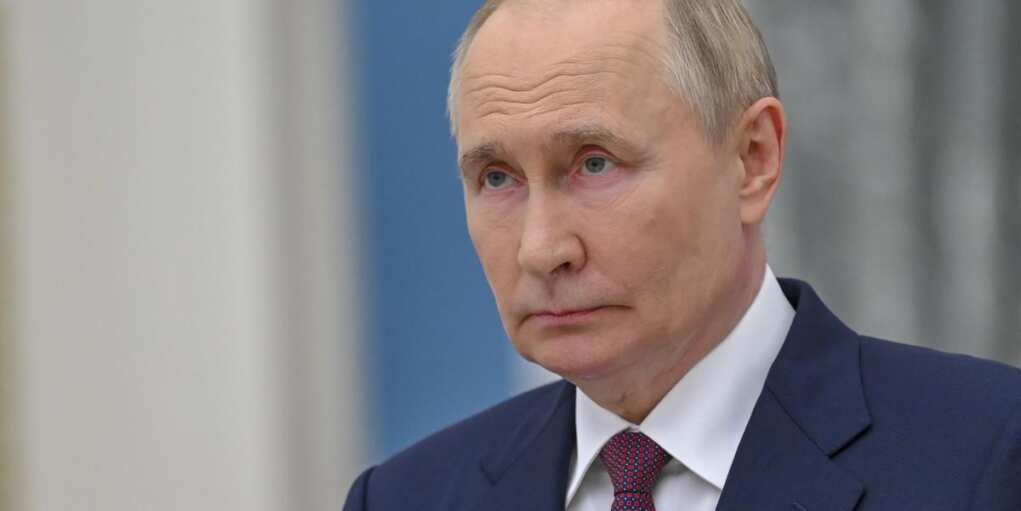
Vladimir Putin isn’t bluffing anymore.
Speaking to top military officers Wednesday, the Russian president made clear: Accept our terms, or we take more territory by force.
“If the opposing side and its foreign patrons refuse to engage in substantive dialogue, Russia will achieve the liberation of its historical lands by military means.”
That’s not negotiating language. That’s an ultimatum. And with Trump’s peace plan reportedly days away from being presented to the Kremlin, the stakes just got higher.
The “Battle-Hardened” Army That Didn’t Exist Three Years Ago
Putin’s most ominous statement wasn’t about territory. It was about capability.
“Our troops are different now, they are battle-hardened and there is no other such army in the world now.”
He’s not entirely wrong.
Three years of grinding combat have transformed Russia’s military. The incompetent force that failed to take Kyiv in 2022 has been replaced by something harder, more experienced, and more lethal.
Western analysts initially predicted Russia would run out of equipment, ammunition, and manpower. Instead, Moscow adapted. They scaled up drone production. They improved their electronic warfare. They learned from their mistakes.
None of this means Russia is invincible. But it does mean the force Ukraine faces today is fundamentally different from the one that stumbled in the war’s early months.
The Nuclear Card Putin Keeps Playing
Putin couldn’t resist mentioning his nuclear arsenal — specifically, the new Oreshnik intermediate-range ballistic missile.
“The new nuclear-capable intermediate range Oreshnik ballistic missile will officially enter combat duty this month.”
Russia first tested a conventionally armed version against a Ukrainian factory in November 2024. Putin has boasted it’s impossible to intercept.
Is he posturing? Probably. Nuclear threats have been part of Russia’s playbook since the war began. But the repeated references serve a purpose: They remind Western leaders that escalation has limits they can’t control.
Every time NATO considers new weapons systems for Ukraine, Putin waves the nuclear card. It’s worked so far. Western support has always stayed just below whatever threshold might trigger direct confrontation.
Russia’s Demands: Everything They’ve Taken, Plus More
Putin’s terms for peace haven’t changed:
- Recognition of all four annexed regions as Russian territory
- Recognition of Crimea (seized in 2014)
- Ukraine must withdraw from areas in eastern Ukraine that Russia hasn’t even captured yet
- Ukraine must abandon its NATO bid
- No NATO troops deployed to Ukraine — ever
That last demand essentially means Ukraine would be permanently vulnerable to future Russian aggression. No security guarantees from the West. No alliance membership. Just a promise from Moscow not to attack again.
We’ve seen how much Russian promises are worth.
Zelenskyy’s Response: “Not Perfect” But “Workable”
Ukrainian President Zelenskyy described the draft U.S. peace plan discussed in Berlin as “not perfect” but “very workable.”
He’s expressed willingness to drop Ukraine’s NATO bid if the U.S. and other Western nations provide security guarantees similar to NATO membership. That’s a significant concession — one that would have been unthinkable a year ago.
But Zelenskyy drew a hard line on territory:
“I rejected the U.S. push for Ukraine to cede control over the eastern Donetsk region.”
Russia wants Donetsk. Ukraine won’t give it. That gap may prove unbridgeable.
Russia’s Plans for 2026: “Accelerate the Tempo”
Defense Minister Andrei Belousov spelled out Moscow’s intentions:
“The key task for the next year is to preserve and accelerate the tempo of the offensive.”
He outlined plans to push deeper into Donetsk, drive Ukrainian forces from parts of Zaporizhzhia, and extend gains into Dnipropetrovsk.
This isn’t defense. This isn’t consolidation. This is continued offensive operations aimed at taking more Ukrainian territory.
If peace talks fail, Russia isn’t going to sit on current lines. They’re planning to advance.
The Daily Reality: Missiles, Drones, and Casualties
While diplomats talk, the war grinds on.
Wednesday alone: At least 26 people injured by Russian glide bombs in Zaporizhzhia. Residential buildings damaged. Infrastructure hit. An educational facility struck.
Overnight: 69 long-range drones launched at Ukraine. Air defenses intercepted 29. The rest got through.
This is what “negotiations” look like from the Ukrainian side. Endless bombardment while world leaders discuss terms.
Trump’s Moment of Truth
President Trump has made ending the Ukraine war a priority. His envoys have been shuttling between capitals. A draft plan is reportedly days from being finalized.
But the fundamental problem remains: Russia and Ukraine want incompatible things.
Russia wants territory and a neutered Ukraine. Ukraine wants security and sovereignty. The gap between those positions is measured in thousands of square miles and millions of lives.
Trump can present a plan. He can pressure both sides. He can threaten consequences for non-compliance.
But he can’t make Putin accept less than he thinks he can take by force. And he can’t make Zelenskyy surrender territory his people are dying to defend.
Putin’s Real Message: We Can Wait You Out
Read between the lines of Putin’s statement and you see his real strategy.
Russia believes time is on its side. Western support for Ukraine has been shaky. European economies are strained. American political will may waver.
If Putin can keep the war going, keep grinding forward, keep absorbing losses — eventually, he believes, the West will tire. Ukraine will exhaust itself. And Russia will get what it wants.
That’s the calculation behind his tough talk. Not confidence, exactly, but patience. A willingness to accept continued casualties in exchange for eventual victory.
The Stakes for Everyone
If Russia succeeds in Ukraine — if they take territory by force and face no lasting consequences — the post-World War II order is finished.
China watches what happens. So does Iran. So does every autocrat calculating whether military expansion is worth the risk.
A Russian victory wouldn’t just redraw Ukrainian borders. It would signal that conquest works. That international law is a fiction. That the strong take what they want.
That’s why Trump’s peace effort matters beyond Ukraine. The outcome will shape global politics for decades.
Diplomacy Has Days, Not Weeks
Zelenskyy said the draft plan could be finalized within days. Then U.S. envoys present it to Putin.
What happens next depends on whether either side blinks.
Putin has made his position clear: Accept our demands, or we keep fighting. Zelenskyy has made his clear: No territorial concessions beyond what’s already lost.
Somewhere between those positions, Trump’s team is trying to find a deal.
The clock is ticking. The bombs keep falling. And Vladimir Putin just reminded everyone what happens if diplomacy fails.
Russia will take what it wants by force. Unless someone stops them.